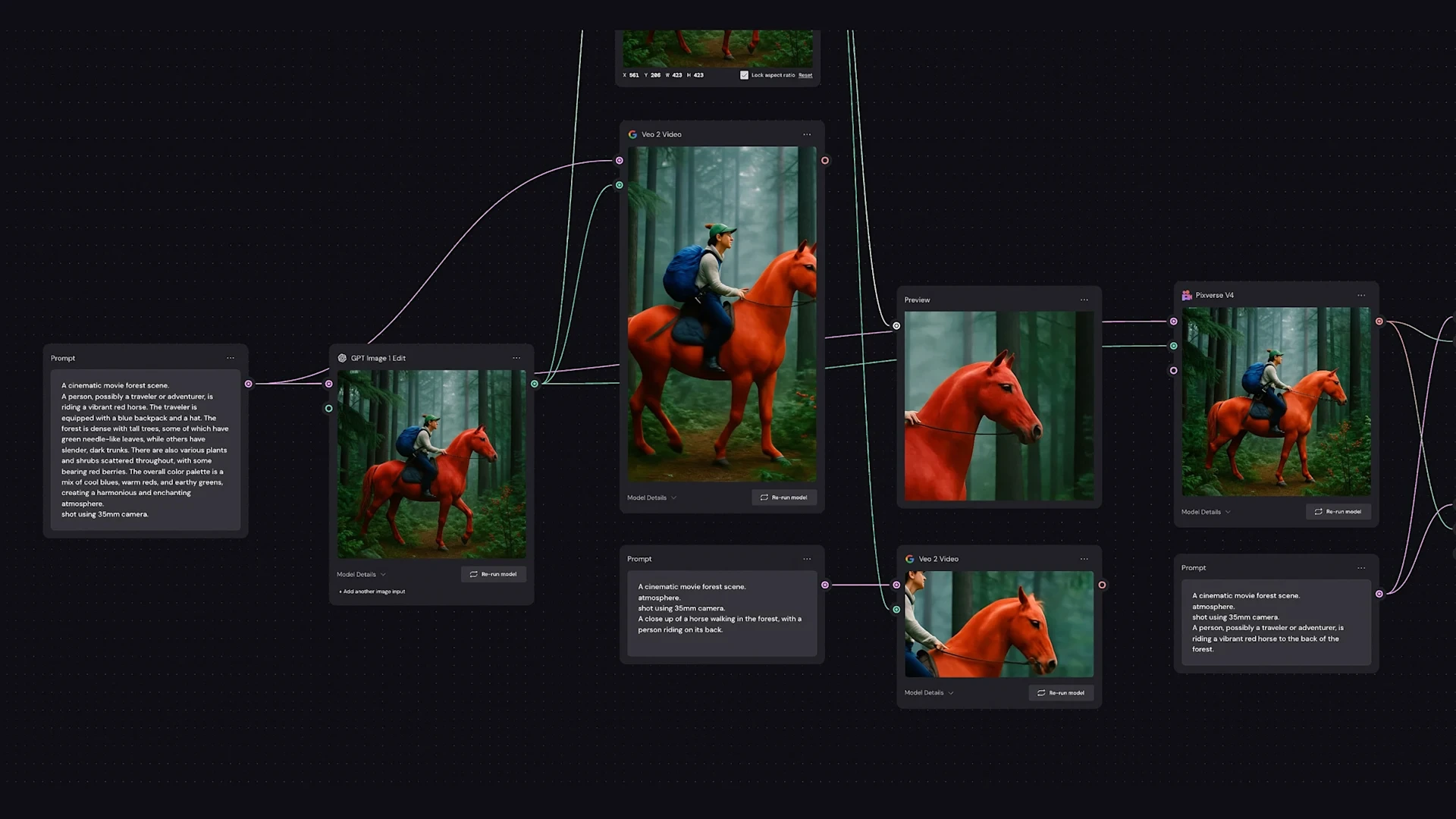
Figma Weave Workflows encodes design system knowledge as executable processes — not documents. Here's what that shift means for the design systems role, and what to watch out for.
There's a document that lives in every mature design system I've ever worked with. It has a name like "Component Usage Guidelines" or "Token Naming Conventions" or, my personal favorite, "How We Do Things Here." It's usually a Notion page with a last-edited timestamp from eight months ago, written by someone who no longer works at the company, referenced in onboarding and then never again.
I've written versions of that document. I've updated it. I've linked to it in Slack when someone used a component wrong. And for 16 years, I've watched it get ignored — not because designers are careless, but because documentation that lives outside the workflow will always lose to the workflow.
Last week, Figma launched Weave Workflows on Figma Community. It's a new resource type that lets design systems teams build repeatable, scalable generative AI workflows on a visual canvas — packaged and shareable like components or templates. And I think it's the first tool that takes the problem of "knowledge nobody reads" seriously.
What Weave Actually Does
The pitch is straightforward: instead of writing down how to do something, you build an executable process that does it. A Weave workflow could be "resize this component set for all breakpoints," or "check this screen against our accessibility tokens," or "generate three variants of this card following our system rules." A designer runs it, gets output, moves on.
The knowledge isn't in a document anymore. It's in the process itself.
That's a genuinely different idea. Design systems have always been about encoding decisions so individuals don't have to reinvent them. First that happened through static libraries, then through Figma components, then through design tokens. Weave extends that logic one step further: you can now encode the workflow around those decisions, not just the decisions themselves.
Why This Changes the Design Systems Role
Here's what I keep thinking about: if Weave works as advertised, the most valuable skill in design systems stops being "knowing the right answer" and starts being "building a process that produces the right answer at scale."
That's a different job.
The design systems lead who used to spend their days doing component audits, writing documentation, and reviewing pull requests now needs to think like a workflow architect. What are the recurring decisions our designers make? Which of those decisions are consistent enough to automate? How do we build a workflow that's opinionated enough to be useful but flexible enough not to break?
That's not a harder job — in some ways it's more interesting. But it requires a different kind of thinking. Process design, not just artifact design.
The designers who'll get the most out of Weave are the ones who can step back from the object level (this button, this color, this spacing) and operate at the system level (this class of decision, this type of constraint, this quality threshold). Most senior designers I know can do this. The question is whether they'll make the shift before someone else does it for them.
The Question Nobody's Asking Yet
Here's the uncomfortable part: Weave workflows live in Figma Community. Which means quality control is crowdsourced.
When you install a component from Community, you're making a deliberate choice to adopt someone else's design decisions. Most experienced designers know to review those components carefully, adapt them, or avoid them entirely when they conflict with their system.
Workflows are different. A workflow isn't just a static artifact — it's a set of instructions that will run on your actual work. A bad component gives you bad UI you can see and fix. A bad workflow gives you a process that silently produces inconsistent output until someone notices something feels off.
I don't think Figma has answered this yet. How do you audit a Weave workflow before running it? How do you know it respects your token structure, your naming conventions, your edge cases? Right now, I'm not sure you can — at least not without opening the workflow and reading it like code, which defeats the purpose for most users.
This matters especially for mid-size teams: too large to just keep everything in someone's head, too small to have a dedicated systems engineer who reviews every workflow before it touches production files. That's probably 60% of the companies using Figma seriously.
What I'd Watch For
Weave is a real idea. It's not another AI feature bolted onto a design tool — it's a structural change in how design knowledge gets encoded and distributed. That's worth paying attention to.
But I'd approach adoption carefully:
The teams that will benefit most are the ones who already have a mature system with clear, consistent rules — because those are the systems you can actually turn into executable workflows. If your design system is still "we mostly agree on these things," automating the workflow will automate the inconsistencies too.
And someone on your team needs to own the workflows the same way someone owns the components. Weave doesn't remove the need for a systems designer — it changes what that person needs to know.
If I'm building a design systems practice right now, I'm not asking "should we use Weave?" I'm asking "who on the team understands our system well enough to encode it as a process — and do we have the culture to maintain that process as the system evolves?"
That question was always the right one. Weave just makes it more urgent.